
Article published on Science.org
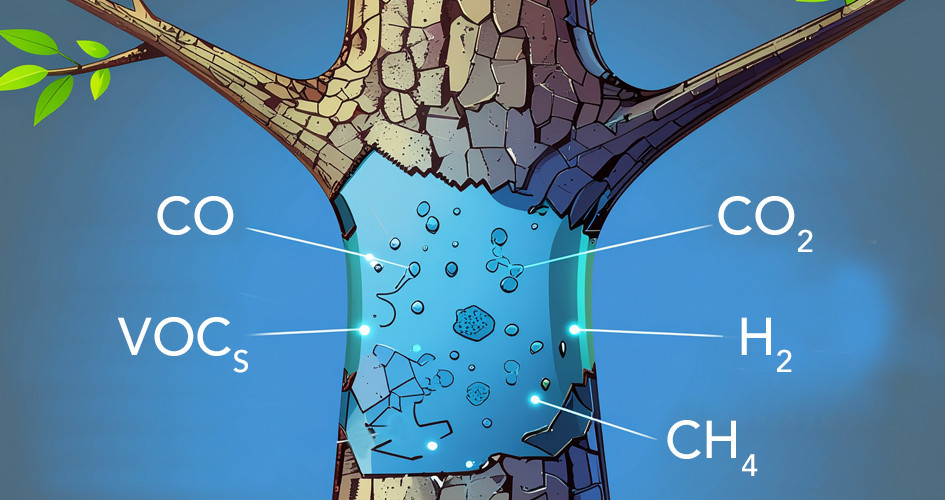
A paper and a perspective published in the January 8th issue of Science report that microbial communities present in the bark of trees (there are over 6 trillion bacteria per square meter of bark), consume CH4, H2, and CO aerobically at rates comparable to those of soils. Since the bark of trees global surface area is of ~143 million km2, almost as large as the global land surface the influence on climate is significant.
The microbial communities of the bark of trees consist of consumers and producers of climate-active gases such as CH4, H2, CO, CO2. The microorganisms aerobically consume CH4, H2, and CO, however in wetlands they switch to production of these gases under anoxia.
Introducing optimized communities of bark microbes that favor or enhance trace gas consumption over production may increase the beneficial effect of trees on climate. In depth studies of their genomes, and engineering of their enzymes is also an exciting opportunity for microbiology.
The paper confirms the important influence of microorganisms on climate and the need for microbiological societies to educate scientists and policy makers.
An increased focus of microbiology on the mitigation of climate change can have a big impact on the health of the planet and the people that live in it.
https://www.science.org/doi/epdf/10.1126/science.aec9651
https://www.science.org/doi/epdf/10.1126/science.adu2182
Article published on Science.org