
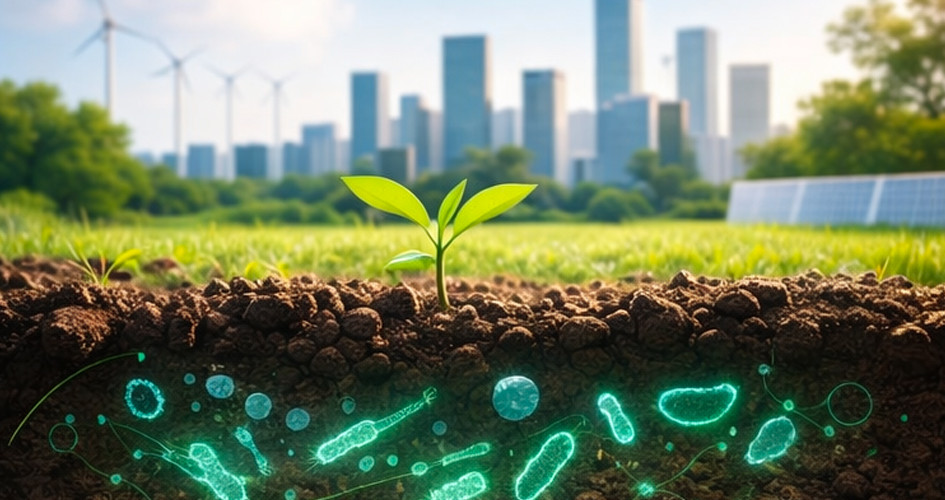
Climate change is one of the most urgent and complex challenges of our time. The global microbiome, composed of 1 trillion species of microbes, during the last 4 billion years of evolved enzymes and solutions for a sustainable life on this planet. Microbes live in soil, rivers, lakes, oceans, rocks and in the most extreme environments of our planet and can digest greenhouse gases and plastics or fix nitrogen. Naturally selected or engineered microbes can use greenhouse gases to make fuels and chemical compounds, or fix nitrogen to make natural fertilizers that can provide food to the population of the planet.
Fully convinced that microbiologists can have a huge impact on the mitigation of climate change, the board of IUMS published a paper entitled “save the microbes to save the planet” describing the importance of micros and the need to keep their diversity https://doi.org/10.1186/s42522-023-00077-2.
This was followed by an alliance between IUMS and the American Society for microbiology (ASM), which put together a Scientific Advisory Group, (SAG), that identified microbes for a non-fossil carbon economy, microbes for food security and ecosystem resilience, and microbes for urgent methane mitigation as the he top priorities that are within reach in the non too distant future https://www.nature.com/articles/d41586-025-00875-w.
In 2025 in number of other Microbiology Societies from all continents, joined the effort and convened a meeting to discuss a global climate change strategy to which all microbiology societies are invited to contribute. This lead to publication in several journals of a paper entitled “Microbes without borders: uniting societies for climate action” which calls for a coordinated alliance, a sort of coalition of all microbiological societies behind a unified voice for climate change https://doi.org/10.1128/mbio.02136-25.
In this paper the societies are asked to commit to engage policy makers, funders, entrepreneurs and advocacy groups, and communicate about microbial science and microbial solutions, and start to think about demonstration projects such as restoring the degraded soil with sustainable bio fertilizers.
In a moment where the fossil fuel-based economy is causing global instability, wars and economic crisis it is extremely important that all microbiologists of the planet prioritize the research on the sustainable democratic solutions that the microbes can provide.